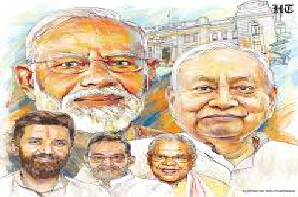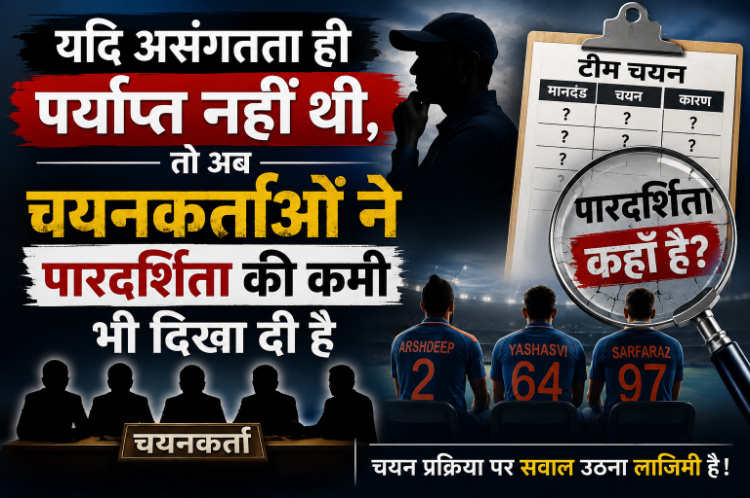
TEAM SELECTION OR GAME OF MUSICAL CHAIRS
20 Oct 2026
Shivaji Sarkar
New Delhi I Wednesday I July 29, 2026
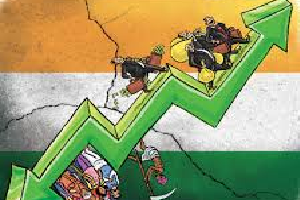
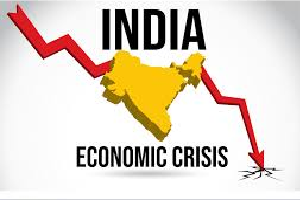
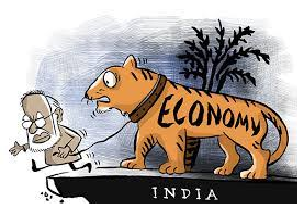
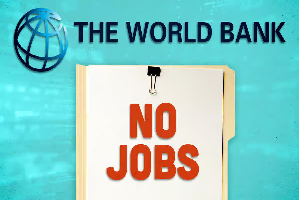
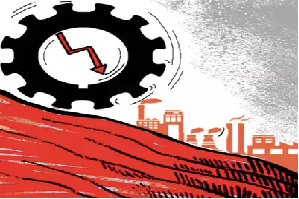
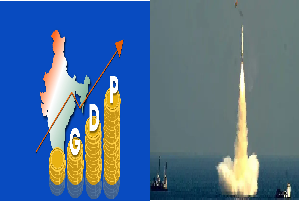
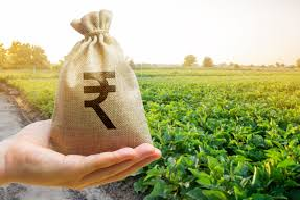
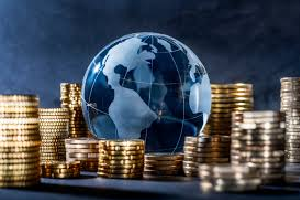
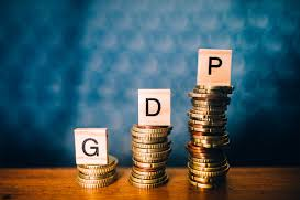
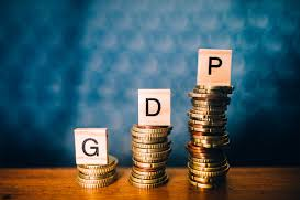
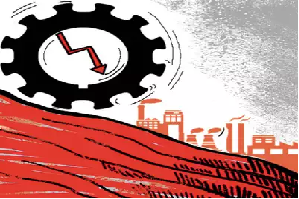
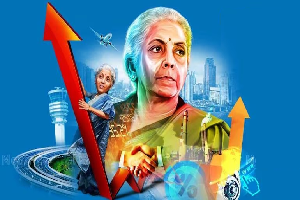
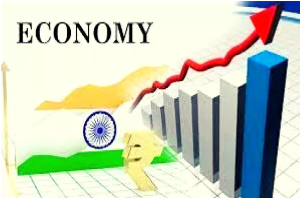
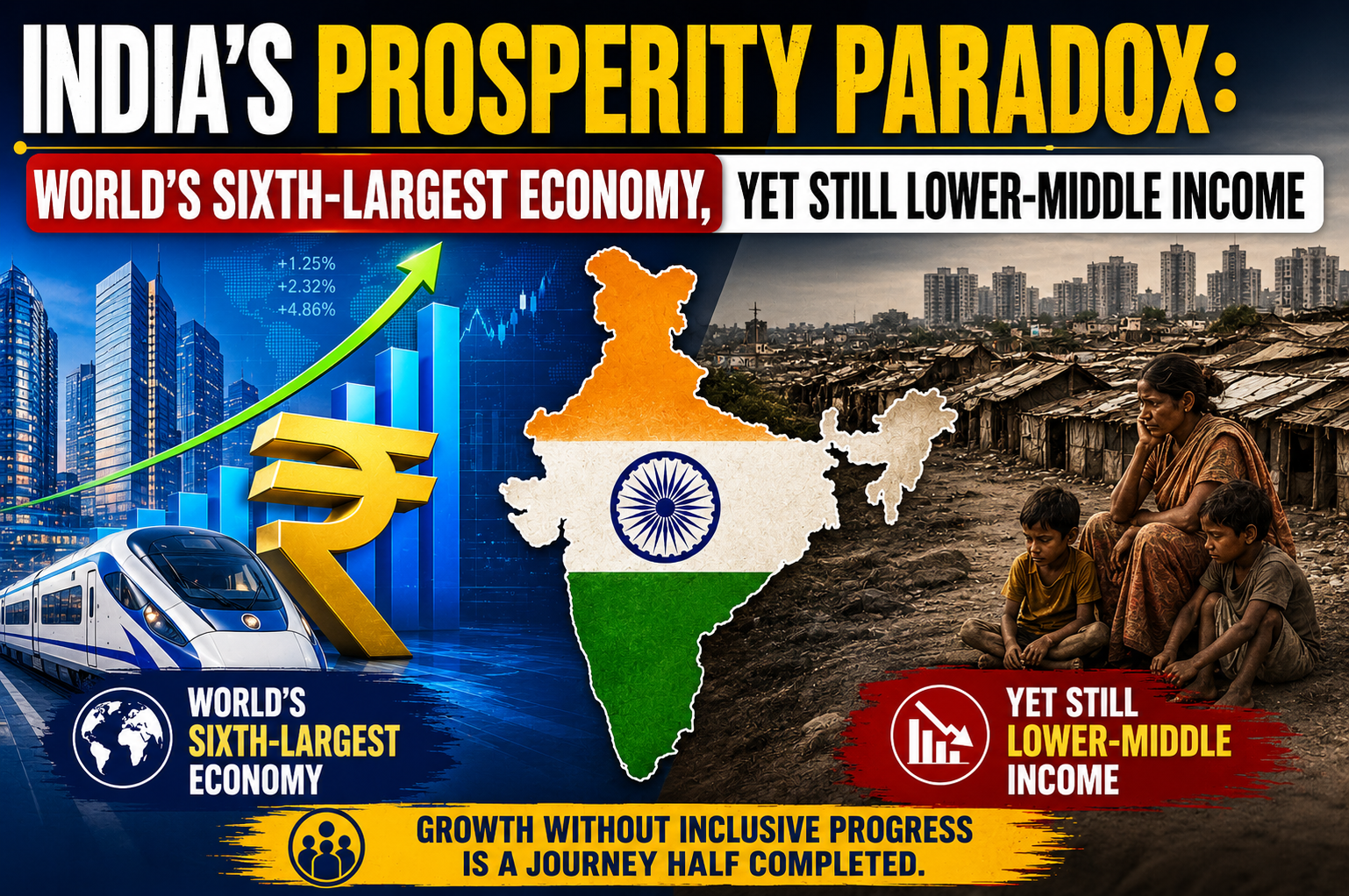
India today stands as the world's sixth-largest economy, with a GDP of about $4.15 trillion, yet the World Bank continues to classify it as a lower-middle-income (LMI) country—a status unchanged since 2009. The contrast between India's impressive macroeconomic performance and its stagnant per capita income highlights a fundamental paradox: while the economy has expanded rapidly, the average Indian has not become significantly more prosperous.
The World Bank classifies countries according to Gross National Income (GNI) per capita. Under its current thresholds, countries with GNI per capita between $1,146 and $4,515 fall into the lower-middle-income category. Despite India's sustained economic growth and repeated recognition as one of the world's fastest-growing major economies, its per capita income has remained within this bracket for nearly two decades.
This raises an important question: why has one of the world's fastest-growing economies failed to graduate to the next income category?
The answer lies beyond aggregate GDP figures. The World Bank itself identifies persistent structural weaknesses, including low labour force participation, sluggish private investment, inadequate structural transformation, regional disparities, and limited access to formal credit. These challenges continue to prevent economic growth from translating into higher individual incomes.
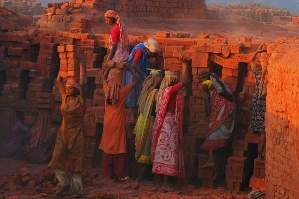
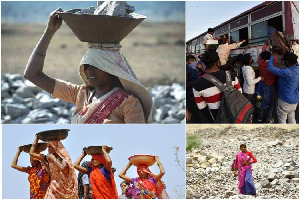
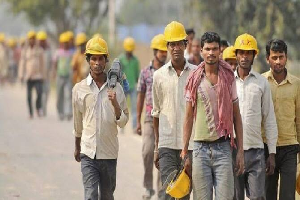
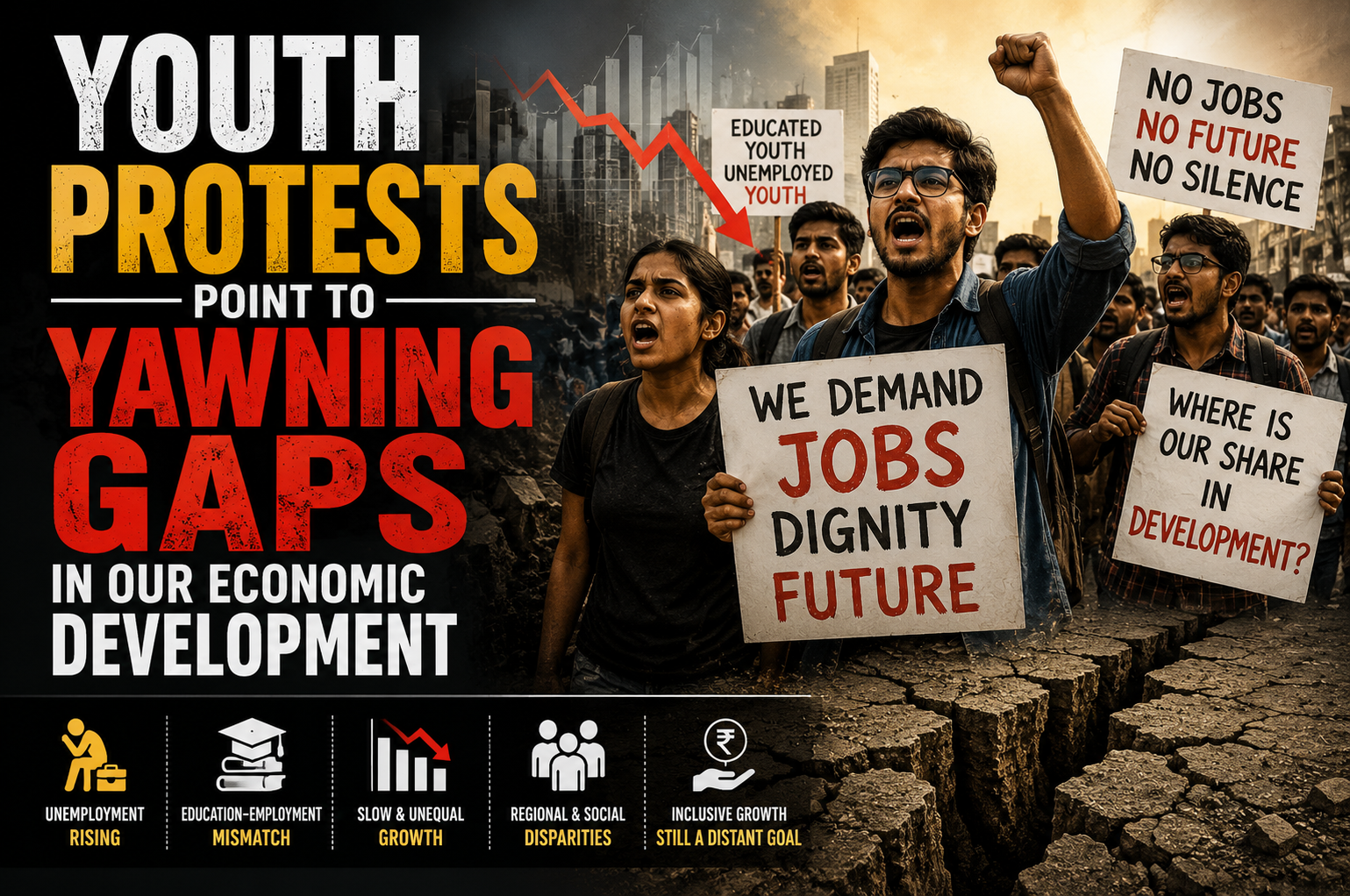
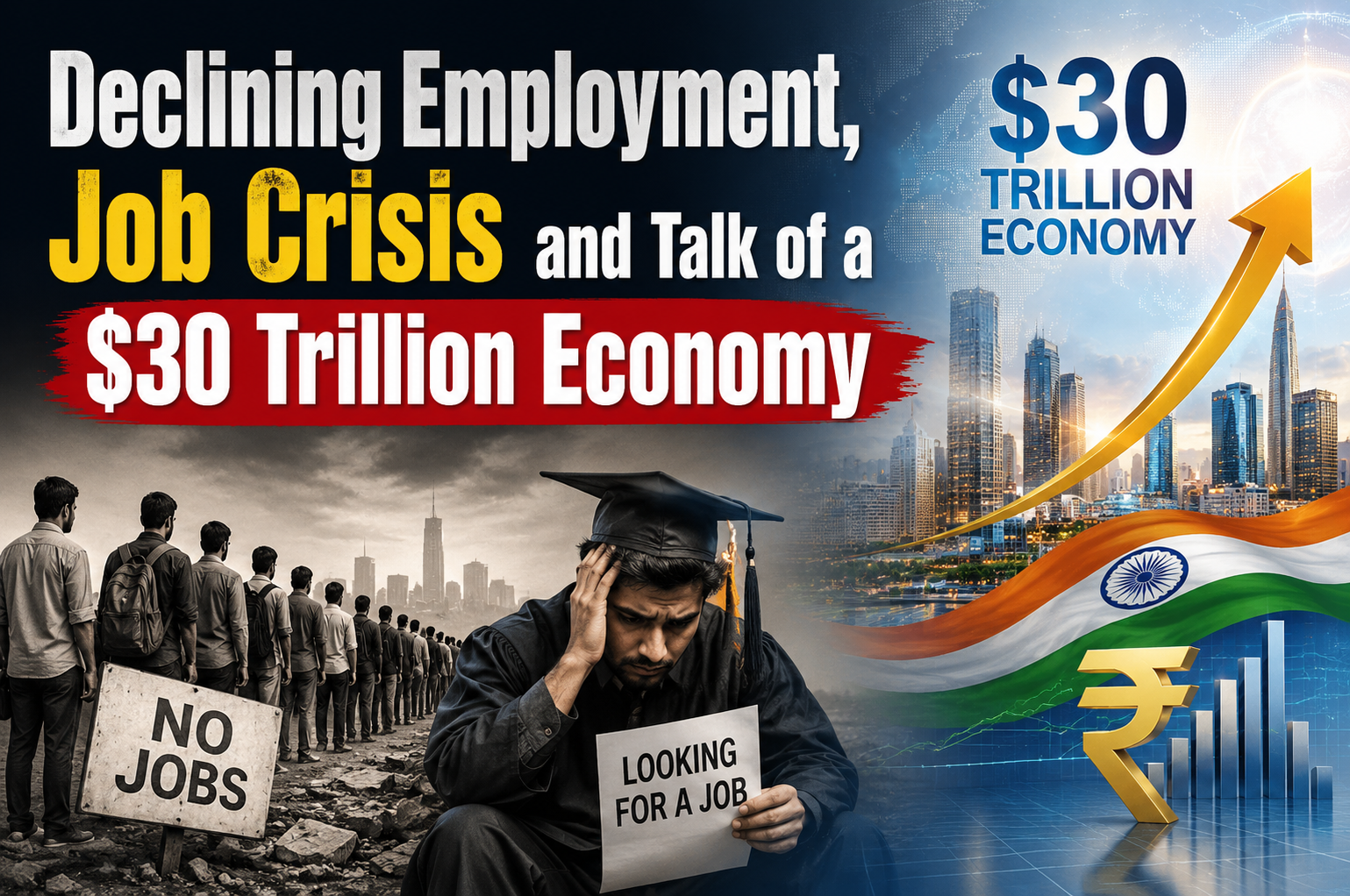
India's labour force participation rate stands at about 56.4 percent, well below regional peers such as Vietnam (around 73 percent) and the Philippines (60 percent). This reflects not merely insufficient job creation but also the quality of employment available. A large share of new jobs, both in government and the private sector, are contractual, informal, and low-paying, offering little job security or opportunities for upward mobility.
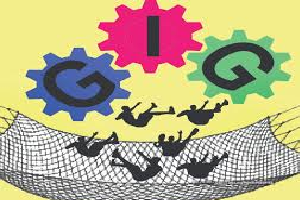
Over the past two decades, labour reforms have increasingly favoured employer flexibility, expanding contractual employment while weakening employment security. Although these measures may have reduced business costs, they have also restrained wage growth despite rising living costs. Global assessments increasingly evaluate countries not only on GDP growth but also on wages, working conditions, labour participation, and social protection. On these parameters, India continues to lag.
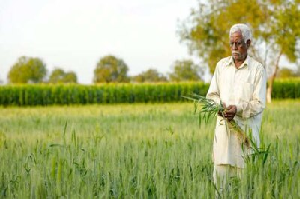
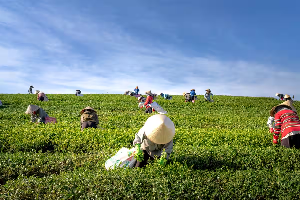
Agriculture presents another structural challenge. Nearly 45 percent of India's workforce remains dependent on agriculture, a sector that contributes a far smaller share to national output. Transitioning workers into higher-productivity manufacturing and services has proceeded slowly, limiting gains in per capita income and overall productivity.
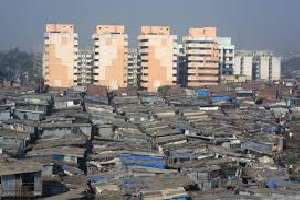
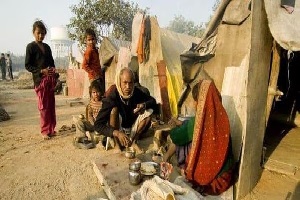
Regional disparities further complicate the picture. While more developed states are integrating into global value chains and attracting investment, poorer states continue to struggle with inadequate infrastructure, weaker healthcare, lower educational standards, and limited industrial development. Without reducing these imbalances, national income growth alone cannot substantially improve living standards across the country.
Investment remains another critical concern. India invests roughly 33.5 percent of GDP, but achieving high-income status would require sustained investment closer to 40 percent. This depends not only on higher public and private investment but also on improving access to formal finance, particularly for micro, small and medium enterprises (MSMEs), which remain the backbone of employment generation. Many MSMEs continue to face severe credit constraints, limiting expansion, innovation, and job creation.
Social welfare spending also presents a mixed picture. India spends about 7 percent of GDP on welfare programmes, with state governments shouldering nearly 90 percent of implementation costs while the Union government's direct contribution remains below 2 percent of GDP. Although expenditure on food security, housing, healthcare, drinking water, and cash transfers has expanded, implementation gaps and uneven fund utilisation continue to reduce the effectiveness of these programmes.
External vulnerabilities add another layer of uncertainty. Global supply-chain disruptions, volatile energy prices, and geopolitical conflicts continue to expose weaknesses in India's economic resilience. Recent international crises have demonstrated that domestic policy shortcomings often magnify the impact of external shocks, affecting growth, employment, and investment.
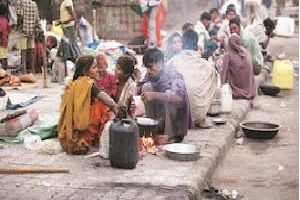
Corporate profitability has improved substantially in recent years, yet these gains have not translated proportionately into broader employment generation or higher wages. Rising profits alone cannot improve living standards unless accompanied by productive investment, better-quality jobs, and wider income distribution. High levels of poverty and persistent socio-economic inequalities continue to weigh on India's overall development indicators.
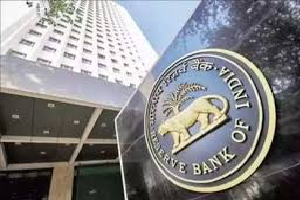
India also remains one of the World Bank's largest development partners. The Bank's current portfolio includes nearly 80 operational commitments worth around $20 billion, supplemented by significant support from the International Finance Corporation. These programmes are intended to strengthen infrastructure, improve public services, expand private-sector employment, and promote sustainable growth. However, the effectiveness of these investments depends largely on implementation, institutional efficiency, and policy coherence.
The World Bank has consistently advocated reforms in taxation, labour markets, ease of doing business, entrepreneurship, investment promotion, and regulatory simplification. While India has undertaken several reforms in these areas, the outcomes have often been uneven. Growth has been concentrated in specific sectors and regions, while employment generation and income growth have lagged behind economic expansion.
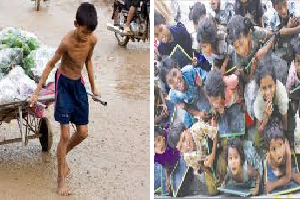
Ultimately, India's challenge is not simply to become a larger economy but to become a more equitable one. Economic success cannot be measured solely by GDP rankings. It must also be reflected in higher incomes, secure employment, better education, improved healthcare, stronger social protection, and wider opportunities for ordinary citizens.
India's continued lower-middle-income classification is therefore not merely a statistical label. It is a reminder that impressive economic aggregates cannot substitute for broad-based prosperity. Unless growth becomes more inclusive, investment more productive, employment more secure, and public policy more effective, the country's global economic stature will continue to coexist with modest living standards for millions.
The paradox of being one of the world's largest economies while remaining a lower-middle-income nation should serve as a call for policy correction. The coming decade offers India an opportunity to bridge the gap between economic size and human prosperity. Whether that opportunity is seized will determine not only India's future global standing but also the quality of life of its people.
-===========