Anil Jauhri
New Delhi I Wednesday I November 18, 2026
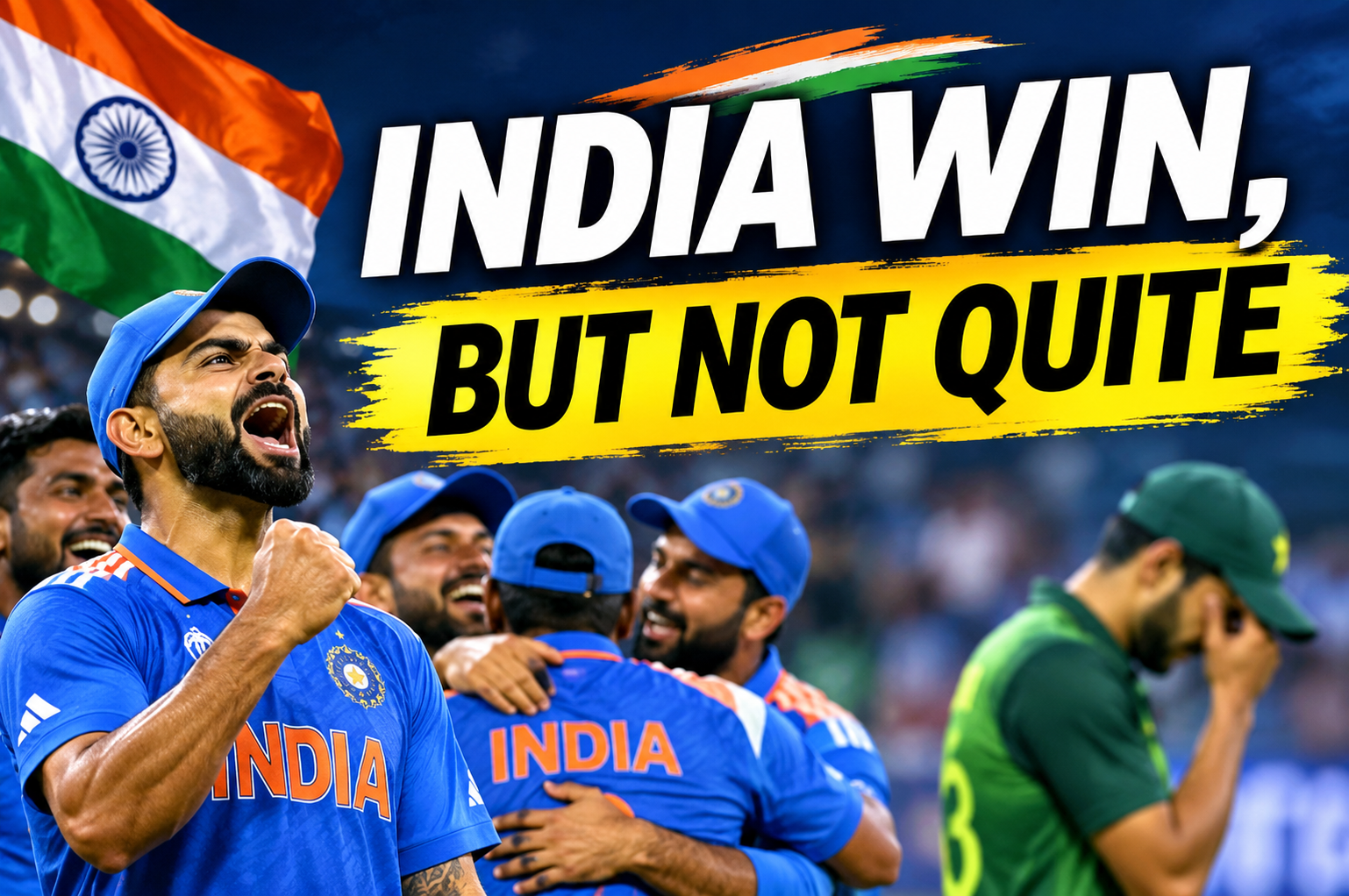
India may have won the five-match ODI series in New Zealand 3–1, a result that looks fairly comprehensive on paper. But does it tell the whole story? Far from it.
India won the first ODI comfortably, but the second exposed serious batting weaknesses. Chasing a modest target of 135, the Indian batting struggled, and it was only Rahul’s calm and composed innings that carried the team across the finish line. The third match was washed out. In the fourth, after New Zealand posted 333, India were bundled out for a humiliating 89 in less than 27 overs. The Indian batting faltered again in the fifth ODI, managing just 209, although New Zealand failed to chase the target.
With India preparing for the 2027 ODI World Cup in South Africa, where playing conditions are broadly similar to those in New Zealand, these performances should ring alarm bells in the Indian camp.
The concern is greater because India have no more overseas ODI assignments before the World Cup. The only remaining matches are at home against Sri Lanka and Zimbabwe. As the earlier tour of England and the recent New Zealand series have demonstrated, performances in home conditions offer little indication of how well the team will fare overseas.
It is particularly surprising that the selectors and the coaching staff, many of whom are accomplished former cricketers with considerable international experience, have been unable to address the team's persistent shortcomings.
Whatever the format, seaming and bouncy pitches demand technically sound batters with a proven record in such conditions. Test cricket, in particular, provides the best measure of a batter's ability to handle these challenges.
If we examine the performance of Indian batters in SENA countries since 2020, the five names that stand out are Rishabh Pant, KL Rahul, Shubman Gill, Ravindra Jadeja and Rohit Sharma, although Rohit's returns have diminished in recent times. Yashasvi Jaiswal should also be included. Despite having played fewer matches, he has scored runs in both Australia and England during India's most recent tours.
The 2023 tour of South Africa, taking both Tests and ODIs into account, throws up a few additional names. Sanju Samson, who scored a century in the ODI series, Virat Kohli and Sai Sudharsan have all demonstrated their ability to perform there, although it was a relatively low-scoring series. Kohli's overseas returns, too, have been declining, as his struggles in Australia in 2025 demonstrated.
This brings us to an uncomfortable but unavoidable question: will Rohit and Virat still merit places in the Indian team when the World Cup is played in South Africa a year from now? They may well score heavily in the home series against Sri Lanka and Zimbabwe, but will runs on familiar pitches be sufficient to justify their selection for South African conditions?
It is strange that India's international schedule provides no further overseas ODI exposure before the World Cup, apart from the six home matches against Sri Lanka and Zimbabwe. This is hardly ideal preparation for a tournament of such importance.
Captain Shubman Gill has clearly stated that he wants to play with his best available side going forward. But are we really following that approach?
Why, for instance, were established players such as Rahul and Gill rested for the last two ODIs in New Zealand? How can net practice be considered a better preparation than actual match exposure, particularly when there were three days between the ODIs and the start of the Test series?
By now, the selectors should have a fairly clear idea of the likely World Cup squad and the combination they want to develop. The Sri Lanka and Zimbabwe series should therefore be used to assess possible replacements and alternatives, rather than merely provide opportunities to established players.
Rohit currently occupies the opening slot and Virat bats at No. 3. Even if both travel to South Africa, the selectors must begin identifying their eventual successors. Yashasvi Jaiswal is an obvious candidate to open, while Sai Sudharsan could be considered for No. 3. Rahul, too, could be an option to partner Gill at the top. India need a dependable opening partnership capable of negotiating the first ten overs and laying the foundation for a competitive total.
What about Pant? Given his outstanding record overseas, he should certainly be considered as the wicketkeeper-batter, preferably at No. 6. Rahul would then play purely as a batter, a role he richly deserves.
However, Rahul's batting position must be clearly defined. He should be assured of a place at No. 5, ahead of Axar Patel. It was difficult to understand why Axar was promoted above Rahul and, subsequently, Ishan Kishan, even when the top order had collapsed and India needed someone to stabilise the innings. The usual argument of maintaining a left-right batting combination also falls apart when Axar is sent ahead of another left-hander, Ishan.
Shreyas Iyer currently occupies No. 4, but his vulnerability against pace, particularly short-pitched deliveries, remains a concern. If Pant returns and India opt for five specialist bowlers with an all-rounder providing additional insurance, one batter may have to make way. Shreyas could therefore find himself under pressure, particularly if Rahul moves up to No. 4, Pant bats at No. 5 and an all-rounder follows.
In the all-rounder's slot, Hardik Pandya, provided he is fit, should be an automatic choice. Jadeja remains another strong contender, offering both batting depth and a reliable spin option at No. 7.
For South African conditions, the three frontline fast bowlers could be Jasprit Bumrah, Arshdeep Singh and either Prasidh Krishna or Mohammed Siraj. Gurnoor has enhanced his reputation and should be considered as a reserve, taking the total number of fast bowlers in a 16-member squad to five.
One name conspicuously missing from the discussion is Mohammed Shami. Ideally, he should have been part of the team, but he appears to have fallen inexplicably out of favour. His experience and proven ability to exploit overseas conditions should not be overlooked.
The remaining bowling slot in the playing XI raises another selection dilemma: should India play a second specialist spinner?
Axar Patel could be the obvious backup, given his performances, particularly with Kuldeep Yadav's place appearing uncertain. But playing two left-arm spinners would limit the variety of the attack. Should India instead consider Washington Sundar or even Naman Dhir? Or should they persist with Kuldeep, whose wrist-spin provides a different dimension to the bowling attack?
Dropping Axar would undoubtedly be a harsh decision, but selecting two left-arm spinners simply for the sake of accommodating both may not be the right approach.
As for the reserve batting positions, India need at least one additional opener and one middle-order batter. Ruturaj Gaikwad and Sai Sudharsan could be considered, while the choice of a reserve spinner remains more complicated for the reasons discussed above.
India's bowling performed reasonably well in New Zealand, but it is worth remembering that the home side were without some of their regular batters, including Devon Conway, Rachin Ravindra and Mark Chapman. Nevertheless, the performances of India's younger bowlers were encouraging, and Arshdeep appears to have strengthened his claim to a regular place in the ODI side.
The only major disappointment was Kuldeep Yadav's solitary outing. Given that he does not seem to enjoy the confidence of the current team management, this may have further weakened his prospects. The return of Bumrah and Pandya should, of course, strengthen the bowling considerably.
The batting, however, remains the principal cause for concern. The selectors need to exercise considerable prudence, make some difficult decisions and settle on a combination suited to South African conditions. Reputation and past achievements cannot be the sole criteria. Recent form, technical ability and proven performance on difficult overseas pitches must carry greater weight.
India have the talent to mount a serious challenge for the 2027 World Cup. But winning the tournament will require more than a favourable home schedule and a few impressive performances. The time to identify weaknesses, test alternatives and build a settled team is now. If India are serious about repeating the glories of 1983 and 2011, they cannot afford to wait until the eve of the World Cup to get their combination right.
Comments (0)
Share your thoughts about this news. Your comment will appear after admin approval.